How Long Is Medical Assistant School in Salt Lake City
How Long Is Medical Assistant School in Salt Lake City?
If you are considering a career change in Salt Lake City, the first practical question is almost always about time: how many weeks until you can start working as a medical assistant? For Salt Lake City Medical Assistant School, the classroom and lab portion runs about 18 weeks, followed by a 80-hour externship in a working medical office near Salt Lake City. That is a fraction of the time a two-year degree takes, and it is built specifically for adults who cannot stop working to go back to school.
This guide walks through exactly what those 18 weeks involve, how the schedule fits around a job, how soon graduates in Salt Lake City typically start interviewing, and what credentials you carry into the Utah job market when you finish.
How many weeks is the medical assistant program in Salt Lake City?
The training at Salt Lake City Medical Assistant School is organized into about 18 weeks of instruction and hands-on lab work, then a 80-hour externship at a medical office in the Salt Lake City area. The weeks are sequenced so each new skill builds on the last, and the externship comes once you have the fundamentals down.
What the weekly schedule looks like
Classes at Salt Lake City Medical Assistant School are scheduled around working adults rather than full-time daytime students. Instruction is grouped into sessions that let most Salt Lake City students keep their current jobs while they train. Each week pairs instruction with supervised practice, so you are handling the work of a medical assistant from early in the program.
Balancing the program with work and family
One of the most common questions from Salt Lake City students is whether a person can realistically train while holding a job or raising a family, and the schedule is built with exactly that in mind. Sessions are grouped so that you are not asked to give up your income for the length of the program, and the hands-on portions are concentrated rather than spread thin across many months. Most students find that 18 weeks of focused effort is far more manageable than the open-ended commitment a two-year degree asks for. The result is a path into a medical office career that fits around the life you already have in Salt Lake City rather than forcing you to put everything else on hold.
Why the program is 18 weeks and not two years
A common worry is that a shorter program leaves gaps. The 18-week length reflects what entry-level work in Utah actually requires, not a shortcut. The curriculum concentrates on the skills Salt Lake City employers expect on the first day and leaves out the general-education coursework that stretches a degree across two years. The externship is built in, so you graduate with real experience rather than only a transcript.
The externship in Salt Lake City
The final stretch is the 80-hour externship at a medical office near Salt Lake City. This is supervised, real-world work alongside an experienced team, not a job shadow. For many students it is also where the first job lead comes from, since you are working directly with a local practice.
What do you learn during those weeks?
The program moves from foundational knowledge into clinical skills, then into the externship where everything comes together in a real Salt Lake City setting.
Foundations and patient care
The early weeks at Salt Lake City Medical Assistant School cover the groundwork: terminology, safety and infection control, professional communication, and the daily rhythm of a medical office in Salt Lake City. This stage gives you the vocabulary and habits the rest of the program builds on (Bureau of Labor Statistics, Occupational Outlook Handbook, 2025). It also helps you get comfortable in a clinical environment early, so that by the time you reach the more demanding hands-on work, the setting itself already feels familiar rather than intimidating.
Clinical and lab skills
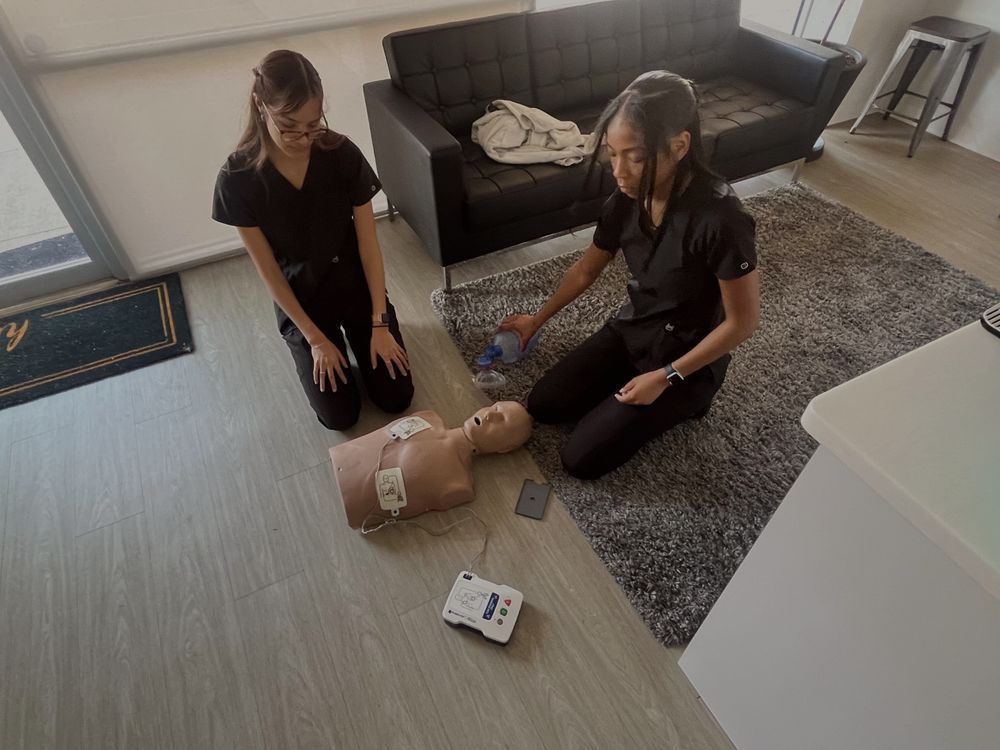
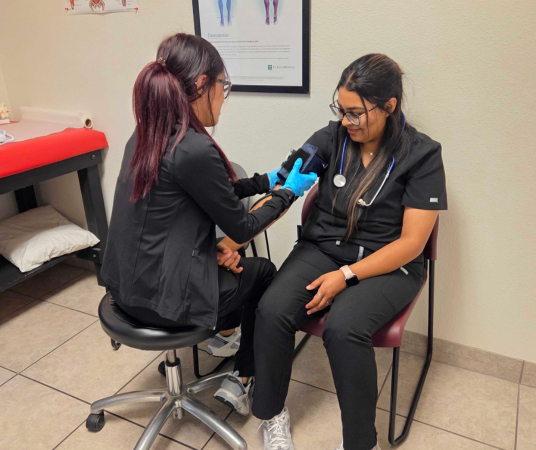
The middle weeks intensify the hands-on work. Salt Lake City Medical Assistant School keeps class sizes small so you get real practice time, building the skills Salt Lake City employers screen for: phlebotomy and specimen collection, EKGs, injection support, and accurate records documentation.
Putting it together before you finish
By the later weeks, students combine individual skills into the full workflow of a medical visit in Salt Lake City, from greeting the patient through the clinical work and the records that follow. That integration is what makes the externship productive rather than overwhelming. It is the point where most students realize how much they have learned in a short time, since each step has prepared them for the next, so the real-world environment feels like a continuation of class rather than a leap into the unknown.
How soon can you start working as a medical assistant in Salt Lake City?
The honest answer is much sooner than most prospective students expect. Because the program runs about 18 weeks rather than two years, a Salt Lake City adult who enrolls this term can be in an externship before the next community-college semester would begin.
From your last week to your first paycheck
A realistic path looks like this: you finish the 18 weeks of coursework, complete your 80-hour externship at a Salt Lake City-area office, and begin applying for roles. For many students it is also where the first job lead comes from, since you are working directly with a local practice. The gap between leaving an old job and starting a new clinical one stays short by design, which is one of the main reasons the program is structured the way it is for working adults in Salt Lake City.
Why a short program works in Salt Lake City
A focused 18-week certificate gets you earning months sooner than a long degree, and the Salt Lake City job market hires for skills rather than seat time. Employers want assistants who can step in and contribute, which is what the hands-on format at Salt Lake City Medical Assistant School is built to produce. Starting sooner also means you begin building real workplace experience earlier, and in this field experience is what moves you up the pay range faster than anything else.
What credentials do you earn in Utah?
Finishing the program is the start of the credentialing step, which varies by state. Graduates of Salt Lake City Medical Assistant School receive a Certificate of Completion and a BLS certification card through the American Heart Association. From there, graduates can pursue the NHA CCMA (Certified Clinical Medical Assistant) and the AAMA CMA (Certified Medical Assistant).
What medical assistants can legally do in Utah
Scope of practice varies by state. Check with Utah Physicians Licensing Board for current requirements in Utah. The specific tasks a medical assistant may perform are set by state law and the supervising provider, so duties can differ from one Salt Lake City office to the next.
What is included when you enroll at Salt Lake City Medical Assistant School?
A short program only works if everything you need is built into it, and Salt Lake City Medical Assistant School is structured that way so Salt Lake City students can focus on learning rather than logistics.
Equipment, supplies, and placement
Your scrubs, supplies, and externship placement are part of the program at Salt Lake City Medical Assistant School, so there are no surprise costs midway through. The 80-hour externship is arranged for you at a medical office in the Salt Lake City area, which means you are not left to find clinical hours on your own.
Support from instructors who have done the job
Instructors at Salt Lake City Medical Assistant School are practicing professionals who know what Salt Lake City employers expect, and small class sizes mean you get real attention during lab work rather than watching from the back of a room. That support is what makes a 18-week timeline realistic for working adults.
What are the other benefits of attending Salt Lake City Medical Assistant School?
Beyond the short timeline, students choose Salt Lake City Medical Assistant School for the things that make a 18-week program work: small class sizes, hands-on practice from the first weeks, instructors who have done the job, and an externship that connects you to medical offices around Salt Lake City. Tuition is $3,490 with flexible payment plans, so you can train without taking on years of student debt.
If you have been waiting for the right time to start, the 18-week timeline means that first day in a Salt Lake City medical office is closer than you might think. Contact Salt Lake City Medical Assistant School today to learn more about becoming a medical assistant in Salt Lake City.
You're only a few months from the medical assistant career you deserve.